Obesity Medicine Certification Enhances GLP-1 Receptor Agonist Outcomes Through 18 Months: A Real-World Multi-Site Cohort Study
- Enara Health , San Mateo, CA, USA
Background
Real-world weight loss with GLP-1 receptor agonists (GLP-1 RA) varies widely and frequently falls short of clinical-trial benchmarks. We examined whether obesity medicine certification of the attributed provider was associated with greater weight loss among patients receiving GLP-1 RA therapy in a multi-site real-world cohort, and whether any such effect was specific to GLP-1 users or also present among non-users.
Methods
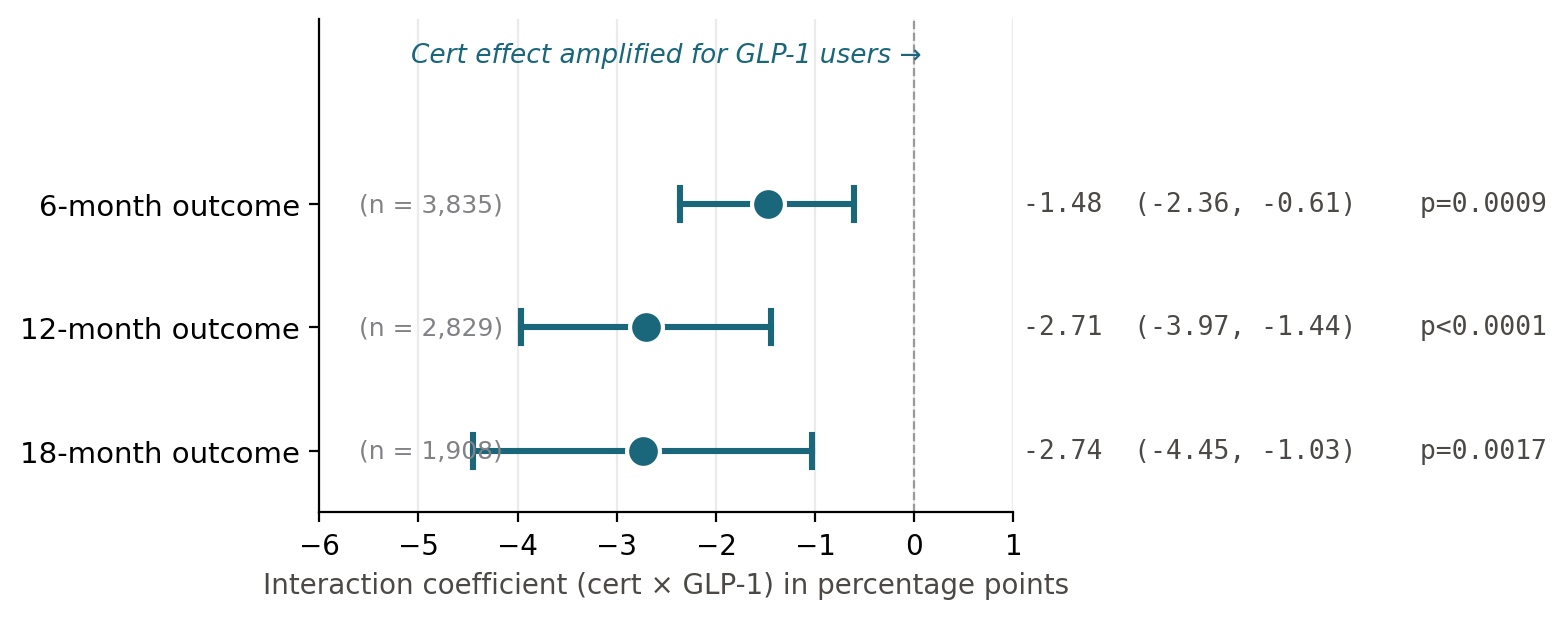
We conducted a retrospective cohort study of 4,439 adults enrolled at 13 clinics within a physician-led integrated obesity care network between January 2023 and September 2025. Patients were attributed to the physician (MD) or advanced-practice provider (APP) they saw most often during their first 90 days. Certification was defined as American Board of Obesity Medicine diplomate status (MDs) or Advanced Certificate in Obesity Medicine (APPs). The primary analysis tested a pre-specified interaction between provider certification and 6-month GLP-1 RA exposure on percent total body weight loss (%TBWL). Linear mixed-effects models with clinic as a random intercept adjusted for baseline BMI, age, sex, GLP-1 RA exposure months, and provider type. Outcomes were assessed at 6, 12, and 18 months.
Results
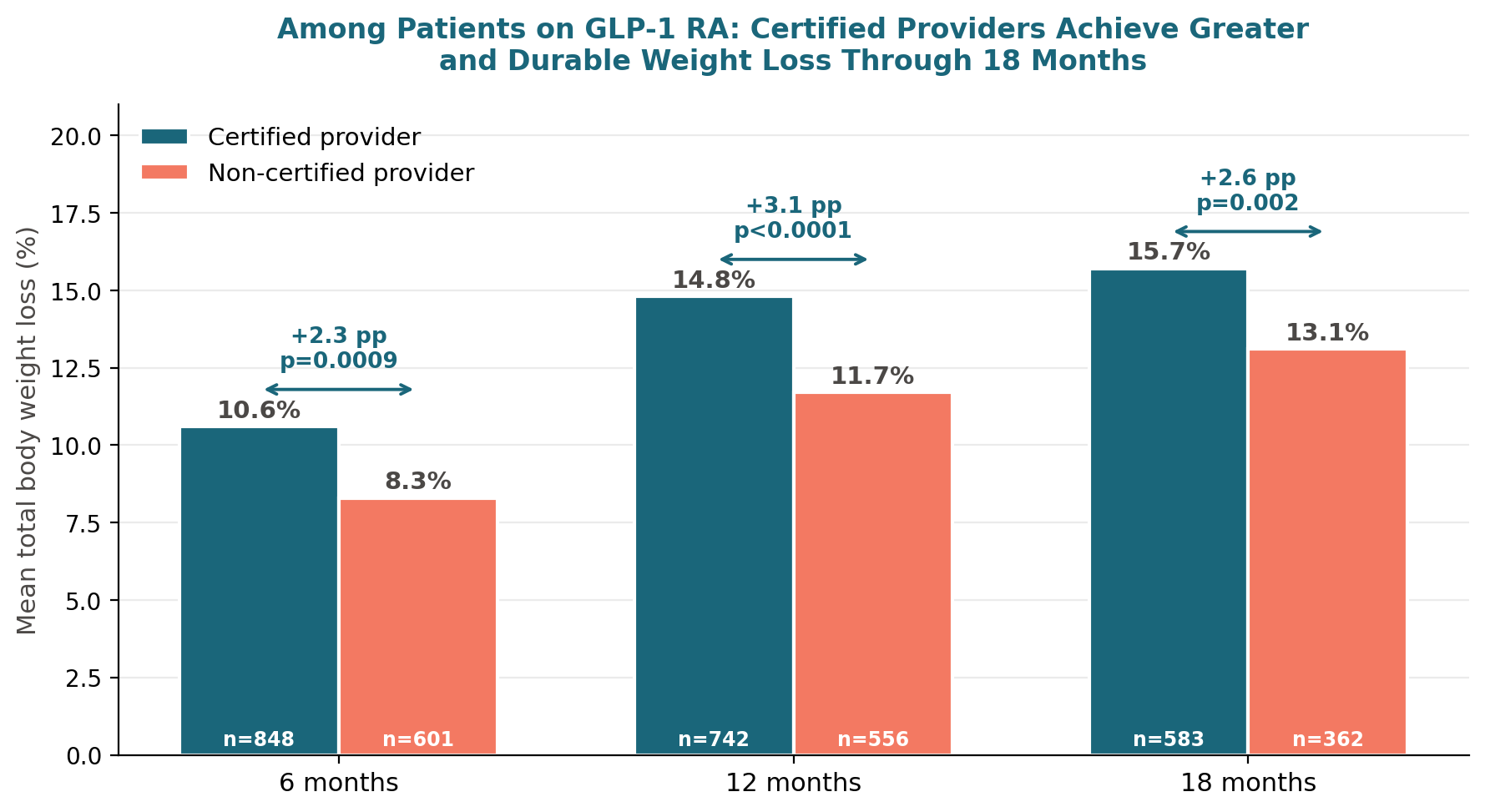
Among GLP-1 RA users, patients of certified providers achieved greater mean weight loss than patients of non-certified providers at all three timepoints: −10.6% versus −8.3% at 6 months (n = 1,449), −14.8% versus −11.7% at 12 months (n = 1,298), and −15.7% versus −13.1% at 18 months (n = 945). The certification × GLP-1 interaction was statistically significant at every timepoint (6 months: β = −1.48, p = 0.0009; 12 months: β = −2.71, p < 0.0001; 18 months: β = −2.74, p = 0.002). Among non-users, no certification effect was observed at any timepoint (all p > 0.17). Certification had no significant overall main effect (6 months: −0.27 percentage points, p = 0.32).
Discussion
GLP-1 receptor agonists deliver substantial weight loss in clinical trials but real-world outcomes commonly fall well below trial benchmarks. Annual GLP-1 RA costs of $7,000–$12,000 per patient have placed pressure on payers and health systems to identify modifiable factors that improve real-world effectiveness. Findings support obesity medicine certification as a measurable, scalable lever to improve real-world GLP-1 RA effectiveness, with direct implications for prescribing networks, value-based care contracts, and payer coverage policy.
Conclusion
Provider obesity medicine certification was associated with substantially greater real-world weight loss specifically among patients receiving GLP-1 RA therapy, with effects that grew at 12 months and were sustained through 18 months. The absence of a certification effect among non-users supports the interpretation that certification reflects pharmacotherapy stewardship competency rather than generic care quality.