A Digital Cardiology-Embedded Obesity Platform Produces Sustained Clinical and Financial Outcomes, Redefining Cardiovascular Prevention
- 1 University of California, San Francisco , San Francisco, CA, USA
- 2 University of Damascus , Damascus, Syria
- 3 University of Santo Tomas , Manila, Philippines
- 4 Enara Health , San Mateo, CA, USA
Background
Obesity is a major contributor to cardiovascular diseases, including hypertension, dyslipidemia, atrial fibrillation, and heart failure. Despite this, cardiology practices often lack structured tools to address obesity as a modifiable risk factor. We evaluated the clinical and financial impact of a digitally delivered, multidisciplinary obesity care platform embedded within cardiology clinics.
Methods
This retrospective cohort study analyzed outcomes from 2,400 adults with obesity enrolled in a digital-first, cardiology-integrated obesity management program. The intervention included physician-directed care, nutritional and exercise therapy, behavioral health support, and optional anti-obesity pharmacotherapy. Program delivery was supported by connected home scales, telehealth visits, and a data-driven care coordination platform. Primary outcomes included percent weight loss sustained at ≥18 months, cardiometabolic markers (HbA1c, systolic blood pressure, LDL cholesterol), and reimbursement metrics. A subanalysis was conducted on 792 patients across one cardiology practice to assess financial performance.
Results
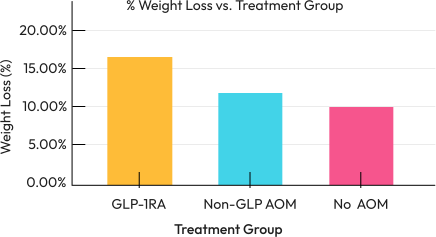
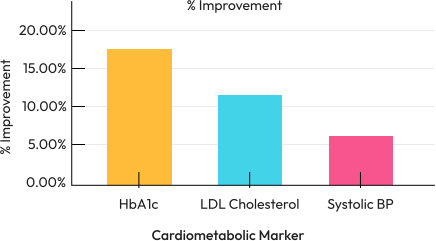
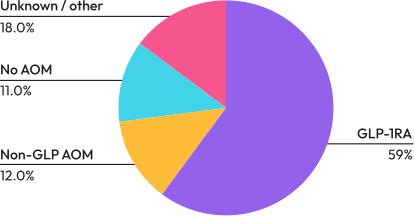
At ≥18 months, the cohort achieved a mean weight loss of 41 lbs (15.3%). Over 70% of long-term enrollees maintained ≥10% weight loss, and more than 40% achieved ≥15% loss. When stratified by pharmacotherapy, participants receiving GLP-1RA (61.4% of the cohort), non–GLP-1 AOMs (12.4%), or no pharmacotherapy (11.0%) demonstrated clinically meaningful weight loss at both thresholds. Cardiometabolic parameters improved significantly: HbA1c (-1.1%), systolic blood pressure (-8 mmHg), and LDL cholesterol (-14 mg/dL). In the financial subanalysis, 83% of claims were reimbursed, with an average collection of $311 per patient per month, translating into a new service line for the practice with $3 million in annualized revenue.
Discussion
The greatest barrier to cardiovascular risk reduction in obese patients is not the lack of effective treatments, but the lack of a structured system to deliver them. This study shows that embedding obesity care within cardiology practices enables patients to achieve sustained weight loss, including ≥15% loss for over 40% of participants, and meaningful improvements in blood pressure, cholesterol, and HbA1c. Notably, even patients not on pharmacotherapy achieved clinically significant results, highlighting the power of a coordinated, digital-first, multidisciplinary approach. Beyond patient outcomes, the program generates substantial revenue, demonstrating that obesity management can be both an essential and financially sustainable pillar of modern cardiovascular care.
Conclusion
Embedding a digital, multidisciplinary obesity platform within cardiology practices produced sustained weight loss and meaningful cardiometabolic improvements while generating a financially sustainable new service line. The model offers cardiology practices a scalable approach to deliver effective obesity care alongside core cardiovascular prevention.