
Authors: M. Rami Bailony1, Hassan Kafri2 , Patricia Dizon3 ,University of California, San Francisco, CA; University of Damascus, Syria; University of Santo Tomas, Manila
Enara Health, San Mateo, CA, USA
Over 70% maintained ≥10% weight loss at 18 months, with more than 40% achieving ≥15% loss, alongside meaningful improvements in blood pressure, cholesterol, and HbA1c.
The model is financially sustainable, generating $311 per patient per month and creating a new revenue stream for practices.
Obesity is a major contributor to cardiovascular diseases, including hypertension, dyslipidemia, atrial fibrillation, and heart failure. Despite this, cardiology practices often lack structured tools to address obesity as a modifiable risk factor. We evaluated the clinical and financial impact of a digitally delivered, multidisciplinary obesity care platform embedded within cardiology clinics.
This retrospective cohort study analyzed outcomes from 2,400 adults with obesity enrolled in a digital-first, cardiology-integrated obesity management program. The intervention included physician-directed care, nutritional and exercise therapy, behavioral health support, and optional anti-obesity pharmacotherapy. Program delivery was supported by connected home scales, telehealth visits, and a data-driven care coordination platform. Primary outcomes included percent weight loss sustained at ≥18 months, cardiometabolic markers (HbA1c, systolic blood pressure, LDL cholesterol), and reimbursement metrics. A subanalysis was conducted on 792 patients across one cardiology practice to assess financial performance.
At ≥18 months, the cohort achieved a mean weight loss of 41 lbs (15.3%). Over 70% of long-term enrollees maintained ≥10% weight loss, and more than 40% achieved ≥15% loss. When stratified by pharmacotherapy, participants receiving GLP-1RA (61.4% of the cohort), non–GLP-1 AOMs (12.4%), or no pharmacotherapy (11.0%) demonstrated clinically meaningful weight loss at both thresholds. Cardiometabolic parameters improved significantly: HbA1c (-1.1%), systolic blood pressure (-8 mmHg), and LDL cholesterol (-14 mg/dL). In the financial subanalysis, 83% of claims were reimbursed, with an average collection of $311 per patient per month, translating into a new service line for the practice with $3 million in annualized revenue.
Embedding a digital obesity platform within cardiology practices yields sustained, clinically meaningful weight loss and improvements in cardiometabolic health, while demonstrating strong financial viability. This care model enables cardiologists to proactively manage obesity as a root cause of cardiovascular disease, transitioning care from episodic event management to continuous preventive intervention.
The greatest barrier to cardiovascular risk reduction in obese patients is not the lack of effective treatments, but the lack of a structured system to deliver them. This study shows that embedding obesity care within cardiology practices enables patients to achieve sustained weight loss, including ≥15% loss for over 40% of participants, and meaningful improvements in blood pressure, cholesterol, and HbA1c. Notably, even patients not on pharmacotherapy achieved clinically significant results, highlighting the power of a coordinated, digital-first, multidisciplinary approach. Beyond patient outcomes, the program generates substantial revenue, demonstrating that obesity management can be both an essential and financially sustainable pillar of modern cardiovascular care.
Fig. 1
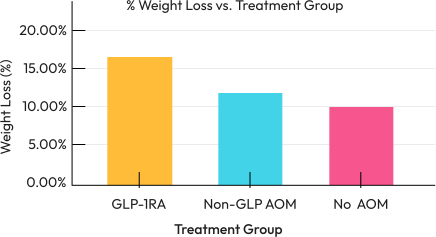
GLP-1RA achieved the greatest weight loss (16.7%), followed by non-GLP medications (11.9%), with behavioral therapy alone slightly lower (10.3%), all showing clinically meaningful reductions.
Fig. 2
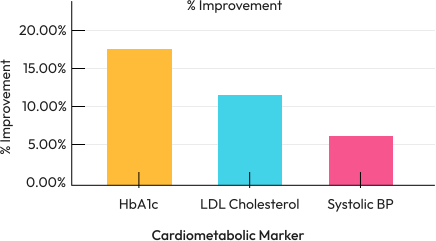
Weight loss from this program not only reduced pounds, but also improved blood sugar, blood pressure, and cholesterol.
Fig. 3
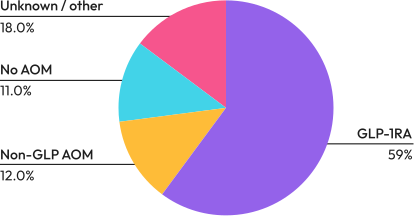
Among participants, 61% received GLP-1 receptor agonists (including Semaglutide, other GLP-1s, or combinations with other anti-obesity medications), 12% received non–GLP-1 pharmacotherapy (such as phentermine, naltrexone, or bupropion), and 11% received no pharmacotherapy. Clinically meaningful weight loss was observed across all treatment strategies, demonstrating that the program is effective for patients on medications or behavioral interventions alone.
Join 10+ cardiology practices already running Enara
Authors: Rami Bailony, MD, Sheryl Haller, Harun Yuksel, MD, Paulina Garzon, Roxanna Khalili, Imran M. Kyeso, Lydia Alexander, MD
Enara Health, San Mateo, CA, USA
Authors: Rami Bailony, MD, Imran M. Kyeso, Harun Yuksel, MD, Sheryl Haller, Lydia Alexander, MD.
Enara Health, San Mateo, CA, USA
Authors: Rami Bailony, MD, Imran M. Kyeso, Harun Yuksel, MD, Sheryl Haller, Lydia Alexander, MD.
Enara Health, San Mateo, CA, USA
